
Hiking in Fiji for solo travellers
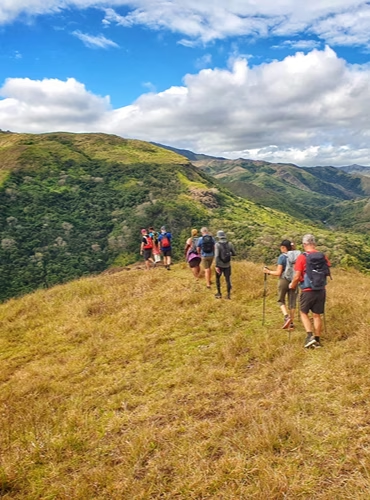
Ideal for solo travellers
Our small group treks take you hiking through Fiji’s hidden and rugged interior, but importantly also offer a window into life in rural Fiji, and an experience of the country’s rich culture.
Fiji’s a great place to go hiking, but as an individual or independent traveller it can be difficult to venture off the beaten track. Traditional land ownership plays a part in this, combined with rough roads once you’re away from the coast, and the fact it’s hard to get your hands on a good quality map. Even for the most adventurous, it can be tricky, but it’s always worth it and is why Talanoa Treks was established.
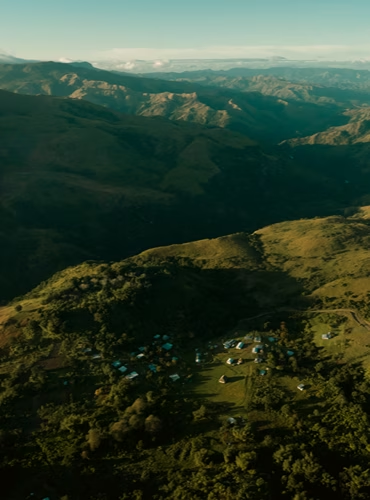
We work in partnership with four villages to ensure your trek is great for you and great for them. You’re led on each hike by community guides from the villages where we eat and sleep, giving you an opportunity to ask as many (or as few) questions as you like. Each of our trips also has a coordinator who drives one of the vehicles carrying your overnight bags, and joins some of the hikes. They’re there to make sure everything runs smoothly, answer any of your practical questions, and ensure we’re not operating too much on ‘Fiji time’!
We aim to limit our scheduled treks to a maximum of 8 people, usually made up of solo travellers and some couples. And, if the trip is scheduled, it will always go ahead, regardless of how many places are filled. For all our itineraries we will either pick you up directly from where you’re staying or we will help arrange a reliable transfer to meet our vehicles along the way.
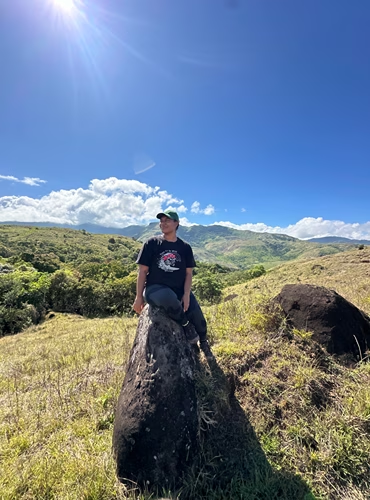
Our three-night Cross Highland Hike is our most popular itinerary, but we have shorter and longer options depending on how much, and how hard, you like your hiking!
It is possible to add a climb of Fiji’s highest mountain, Mt Tomaniivi, to the beginning of this trip. Check out the full itinerary here.
Packing
This is not an exhaustive list and is an aid to common sense! We do not expect you to go out and buy all these things new. They’re general items we recommend you either bring, pack an alternative to or consciously disregard.
Etiquette
When you’re visiting or staying in a Fijian village there are some important rules for you to remember so that you are being respectful of Fiji’s history and culture.
Tips
Some tips to make your trip more enjoyable and rewarding
The starting points for this itinerary are Suva, Nadi or the Suncoast. The drive times to our partner villages are similar from all three places as we’re heading into the middle of Viti Levu, Fiji’s largest island.
Nadi is the main tourism hub with access out to the Mamanuca and Yasawa islands and is where you will likely fly into. Coming to Suva will give you an opportunity to explore the hub of the South Pacific, a bustling place, with cafes, restaurants and a bit of culture (have a browse round the Fiji Museum and a beverage of your choice at the refurbished Grand Pacific Hotel). Alternatively, resorts tucked away on the Suncoast are laid back, great for diving, and will minimise your driving time.
The ending point is anywhere from Nadi to Sigatoka to Suva along the south coast of Viti Levu.
Our itineraries are designed for hikers. While they cover a variety of levels of difficulty, they are enjoyed most by people with a good level of fitness who hike regularly. The visit to Nabalesere and their waterfall is within most people’s ability. The track is 1.5km each way, with some up and down, but no time pressure. All the other walks are more strenuous. Longer days should leave you feeling satisfyingly tired after a good day’s hiking with a sense of achievement. The challenge of walking in Fiji comes from the heat, humidity, remoteness and the nature of the tracks, which are not constructed paths, are uneven, and can become muddy and slippery. If you don’t exercise regularly, we’d recommend getting out on the trail before you come to Fiji, as you’ll enjoy your trip with us all the more!
Footwear
Approach or trail shoes are ideal for Fiji conditions. But trainers/runners with a good grip or other walking shoes will do. Avoid stylish trainers with no grip! Paths can be slippery and muddy – especially after rain. We will also be crossing small creeks and some larger rivers, and you will get your feet and up to your knees wet! We recommend keeping your shoes on at all times, whether you’re crossing a river or even swimming.
Other clothing
Most people wear a lightweight t-shirt (quick-dry, collared t-shirts are ideal) and a pair of shorts for walking, but if you want to protect your shins from grass cuts, then trousers, long socks (stylish!) or exercise leggings are highly recommended. If you have a lightweight raincoat/pac-a-mac, it’s worth carrying it in case we get caught in a shower… it won’t keep you dry, but it’ll keep the wind out. We also strongly recommend you bring a hat to keep the sun off your head.
Although the piped water in the villages is drunk by the locals, to reduce the chance of any problems we strongly recommend you only use only filtered, treated, or boiled water. We carry a supply of filtered water in our vehicles and we have installed Lifestraw Community filter systems at each overnight for refilling bottles. Lemon-leaf and lemongrass tea, using boiled water, is in plentiful supply in the villages, and with a bit of sugar added makes for a good energy drink!
In Fiji, you need to carry and be drinking a lot of water. How much will depend on the length of the walk, the heat, humidity, your own personal fitness, and how much you naturally sweat. However, you should be prepared to carry at least 2 litres of water, in your day pack and ensure you have enough carrying capacity. In case of urgent need there are opportunities to replenish water bottles on some of the walks from side streams, using our filter or purifying tablets. We recommend a 2 to 3-litre capacity water reservoir/bladder, so you can sip away during hikes, or lightweight refillable bottles, plus an additional smaller bottle to mix electrolytes or for the car journeys. Taking on board electrolytes on a hot day can make a big difference.
Please note that drinking alcohol is not allowed in Fijian villages
Dinner and breakfast are provided by the villages. On this trip, you are responsible for your packed lunches and snacks to keep you fuelled during the hikes. Please let us know if you have any dietary requirements before your trip. There are no shops or stores once we leave the coast.
Check out our FAQs and if there’s anything you can’t find the answer to, please just drop us a line via the Enquiry Form or email [email protected].