
Mt. Batilamu… DIY options!
If you live in Fiji or are simply happy to do things under your own steam then you can visit the Koroyanitu Heritage Park, and climb Mt Batilamu independently
Mt. Batilamu… DIY
If you live in Fiji or are simply happy to do things under your own steam then you can visit the Koroyanitu Heritage Park, and climb Mt Batilamu independently.
If joining a fully supported trip is not an option, then check out these alternatives.
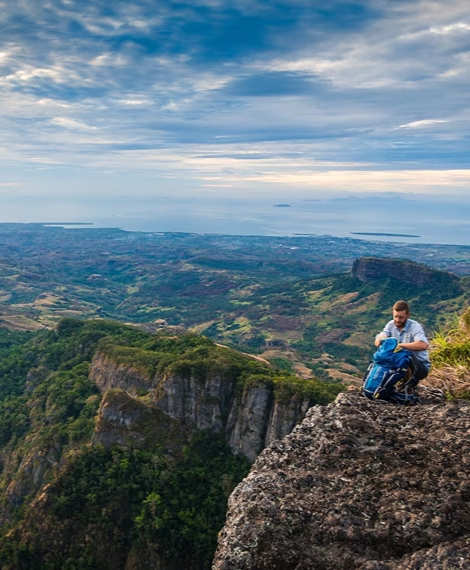
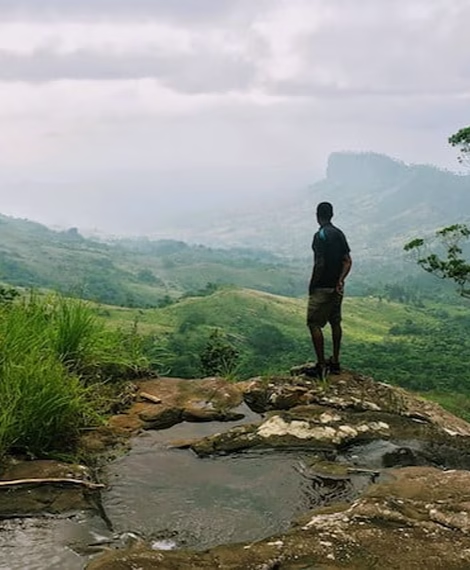
Going independently...
Mt Batilamu is in the Koroyanitu Heritage Park. This is only 30mins inland from Lautoka, and centred on Abaca village. Here’s how to reach Abaca in Google Maps.
Abaca village has a visitor centre where you can pay a park entry fee (approx $20-30pp) and arrange a guide. If you want a guide it’s good to call in advance (which I’d recommend). Try Kalesi on 7365419, or Melisa on 7443352 / 7896879 or Pau on 7193194 / 9663054. It might take several attempts to get through, or if you live in Nadi you could always drive up to make arrangements in advance. The cost of a guide varies.
Transport
If you don’t have your own vehicle, we recommend hiring a 4WD with driver from pehicle.com
Please be prepared
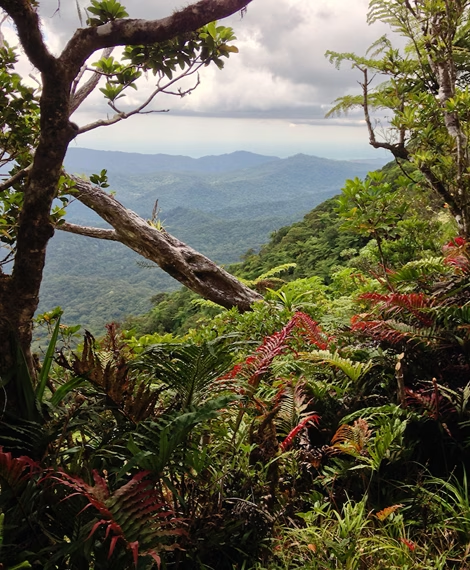
If you do go independently, please be prepared. If you’re not familiar with hiking, try one of the easier hikes first to get a sense of what to expect. Take plenty of water (2-3 litres per person for any longer hike), and food/snacks to keep your energy levels up, and wear appropriate footwear and clothing (including a hat!). Here’s our detailed packing list for people who book onto multi-day and overnight hikes with us.
Options
You have several options for hikes in the area.
Short waterfall hike
From the visitor centre you continue up the road to a great swimming hole (there’s a rustic lodge hidden in the trees here), where you cross the river, then head via the pagoda and through gardens to the falls.
Middle-distance circular hike
Again via the swimming hole you carry on along a track through the forest to the big waterfall, then come back along a grassy ridge and the pagoda, back to the swimming hole.
Climb Mt Batilamu (1,100m)
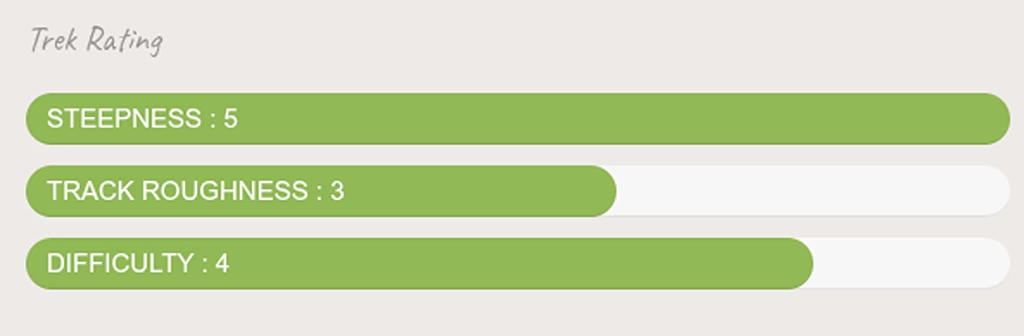
It’s about a 3hr steep climb to the top, along a fairly good track, to a small lodge/hut. 15mins beyond the lodge is a great cliff top viewpoint looking over the Nadi valley. You should allow the same amount of time coming back down, and if you’re feeling fit you can add in a detour to the waterfall and swimming hole in 1. For views this hike is great, and well worth the effort. It’s possible to do it as a day climb, but you can also go up in an afternoon, stay at the hut enjoying sunset and dawn from the top, and come down the next morning. The hut has mattresses and basic pots, pans, and a gas stove.
The hut at the top of Batilamu
The hut at the top of Batilamu sleeps approximately 10 on shared bunks, but there is some floor space and room for tents. The hut is equipped with crockery and pots/pans, and has a gas stove. We ordinarily buy and carry up veggie curries and heat them up for dinner. There is a small rainwater tank. Water should be vigorously boiled and/or treated before drinking. If you make arrangements in advance the village will ensure the hut is ready for. Your guides from the village will stay with you and can help cook etc – and you should take enough food for them too. For an extra fee they will arrange and prepare food.
There is also a hut closer to the village if you want to spend more time in the area.
Contact Esira directly
Esira can be contacted on +679 9835430. You can also try his son, Meli on +679 2028451 (Meli is also available through WhatsApp and Viber). If you’re interested in birding, it’s worth asking if Meli is available to guide.
Day-trip or overnight
Climbing Mt Batlimu in a day is possible from Denarau, Nadi, and Lautoka hotels, but requires an early start. Staying at the hut at the top of Batilamu allows you to head up in the afternoon, and return down the next morning making the most of sunset and sunrise views.
Please note
The information provided here is to support independent travellers to visit more remote places in Fiji to go hiking. You are fully responsible for your actions and need to exercise judgement based on your experience and preparedness for any hike taking into account recent and forecast weather conditions and river levels. We bear no responsibility for any action you take based upon this information.
Packing
This is not an exhaustive list and is an aid to common sense! We do not expect you to go out and buy all these things new. They’re general items we recommend you either bring, pack an alternative to or consciously disregard.
Etiquette
When you’re visiting or staying in a Fijian village there are some important rules for you to remember so that you are being respectful of Fiji’s history and culture.
Tips
Some tips to make your trip more enjoyable and rewarding
The starting points for this itinerary are Suva, Nadi or the Suncoast. The drive times to our partner villages are similar from all three places as we’re heading into the middle of Viti Levu, Fiji’s largest island.
Nadi is the main tourism hub with access out to the Mamanuca and Yasawa islands and is where you will likely fly into. Coming to Suva will give you an opportunity to explore the hub of the South Pacific, a bustling place, with cafes, restaurants and a bit of culture (have a browse round the Fiji Museum and a beverage of your choice at the refurbished Grand Pacific Hotel). Alternatively, resorts tucked away on the Suncoast are laid back, great for diving, and will minimise your driving time.
The ending point is anywhere from Nadi to Sigatoka to Suva along the south coast of Viti Levu.
Our itineraries are designed for hikers. While they cover a variety of levels of difficulty, they are enjoyed most by people with a good level of fitness who hike regularly. The visit to Nabalesere and their waterfall is within most people’s ability. The track is 1.5km each way, with some up and down, but no time pressure. All the other walks are more strenuous. Longer days should leave you feeling satisfyingly tired after a good day’s hiking with a sense of achievement. The challenge of walking in Fiji comes from the heat, humidity, remoteness and the nature of the tracks, which are not constructed paths, are uneven, and can become muddy and slippery. If you don’t exercise regularly, we’d recommend getting out on the trail before you come to Fiji, as you’ll enjoy your trip with us all the more!
Footwear
Approach or trail shoes are ideal for Fiji conditions. But trainers/runners with a good grip or other walking shoes will do. Avoid stylish trainers with no grip! Paths can be slippery and muddy – especially after rain. We will also be crossing small creeks and some larger rivers, and you will get your feet and up to your knees wet! We recommend keeping your shoes on at all times, whether you’re crossing a river or even swimming.
Other clothing
Most people wear a lightweight t-shirt (quick-dry, collared t-shirts are ideal) and a pair of shorts for walking, but if you want to protect your shins from grass cuts, then trousers, long socks (stylish!) or exercise leggings are highly recommended. If you have a lightweight raincoat/pac-a-mac, it’s worth carrying it in case we get caught in a shower… it won’t keep you dry, but it’ll keep the wind out. We also strongly recommend you bring a hat to keep the sun off your head.
Although the piped water in the villages is drunk by the locals, to reduce the chance of any problems we strongly recommend you only use only filtered, treated, or boiled water. We carry a supply of filtered water in our vehicles and we have installed Lifestraw Community filter systems at each overnight for refilling bottles. Lemon-leaf and lemongrass tea, using boiled water, is in plentiful supply in the villages, and with a bit of sugar added makes for a good energy drink!
In Fiji, you need to carry and be drinking a lot of water. How much will depend on the length of the walk, the heat, humidity, your own personal fitness, and how much you naturally sweat. However, you should be prepared to carry at least 2 litres of water, in your day pack and ensure you have enough carrying capacity. In case of urgent need there are opportunities to replenish water bottles on some of the walks from side streams, using our filter or purifying tablets. We recommend a 2 to 3-litre capacity water reservoir/bladder, so you can sip away during hikes, or lightweight refillable bottles, plus an additional smaller bottle to mix electrolytes or for the car journeys. Taking on board electrolytes on a hot day can make a big difference.
Please note that drinking alcohol is not allowed in Fijian villages
Dinner and breakfast are provided by the villages. On this trip, you are responsible for your packed lunches and snacks to keep you fuelled during the hikes. Please let us know if you have any dietary requirements before your trip. There are no shops or stores once we leave the coast.
Check out our FAQs and if there’s anything you can’t find the answer to, please just drop us a line via the Enquiry Form or email [email protected].