
Waterfall and Cave… DIY options!
If you’re unable to join a scheduled trip with us, or just live in Fiji and can travel independently, then you can visit Nabalesere’s waterfall and the cave at Wailotua under your own steam.
Waterfall and Cave
If joining a fully supported trip is not an option, then check out these alternatives.
Going independently...
If you’re making your own arrangements, we strongly recommend you follow the itinerary and timings outlined below. Doing so helps the villages, and ensures you make the most of daylight hours. If you don’t have your own vehicle, we recommend hiring a 4WD with driver from pehicle.com.
Day-trip
An easy day-trip from Suncoast (Rakiraki) hotels or a long day out of Suva, enjoy the drive along the scenic King’s Road and then inland to the edge of the Greater Tomaniivi forest reserve; soak up the atmosphere at Nabalesere’s stunning waterfall and swim in the refreshing waters; warm up with a cup of draunimoli and a local lunch in the village.
Combine your trip with a visit to the historic Wailotua cave on the return journey to Suva or as a separate outing.
Transfers
Either location is a good option as a detour if you are transferring from Suva to the Suncoast or back. If you don’t have your own vehicle, we recommend hiring a 4WD with driver from pehicle.com.
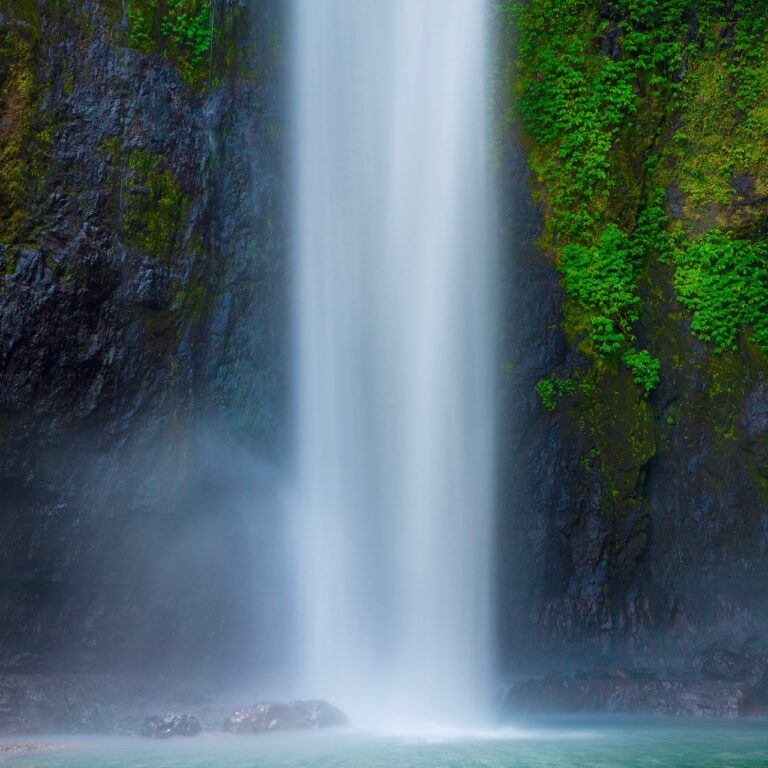
Savulelele waterfall, Nabalesere village
The Nabalesere Tourism Committee can take your booking directly. The village welcome direct bookings from visitors to trek to their beautiful waterfall preferably on Wednesdays, Thursdays, Fridays or Saturdays. Visits on Sundays are not possible.
Contact village directly
Vodafone coverage in the village is patchy so please try calling several days in advance, be patient, send a text message with clear information (when you’d like to go, the number of people, a contact name), and call again. The village focal points are Sefo on 2199470 or 8766476 and Paula on 9398393.
Pricing
Your payment includes guides to the waterfall and can include lunch in the village, prepared with fresh, local ingredients. You will need to take a sevusevu, ensure everyone observes cultural requirements (sulus in the village, swimming in t-shirts and shorts etc). You will be met at the village entrance by a member of the committee on arrival who will brief you and also present your sevusevu on your behalf.
Waterfall visit, Nabalesere | FJD 50pp or FJD 60pp with lunch, plus a sevusevu
With local ID | FJD 30pp or FJD 40pp with lunch, plus a sevusevu
Directions
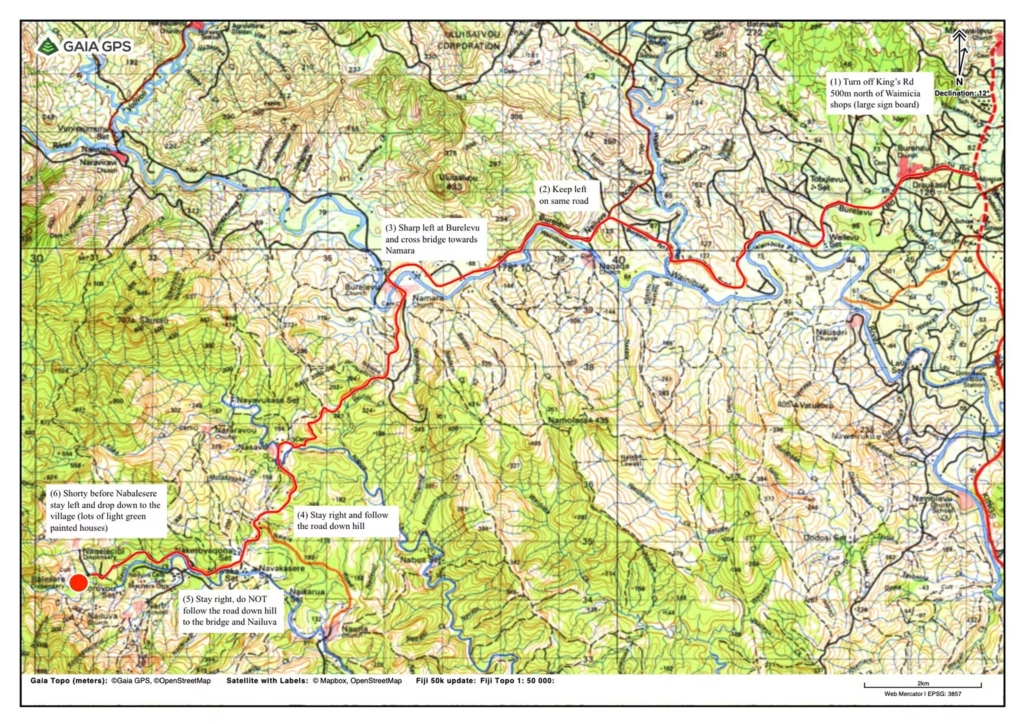
From the King’s Road, it takes about 1 hour on gravel roads to reach Nabalesere village. Ensure your vehicle has sufficient clearance and drive according to the road conditions.
Nakoroloaloa cave, Wailotua village
The cave in Wailotua is easily accessed from the King’s Road. Turn on to the gravel road following the edge of the village that looks like it is leading to the quarry. This turning may be signposted to ‘caves’. The last house on the right belongs to the Tui Wailevu and his wife, Biu.
Contact village directly
Biu (2742889) is the best person to contact to arrange a visit in advance, and she can guide you into the cave sharing stories along the way. She is also an expert masi maker and designer. This is a great way to break a journey between Suva and Rakiraki and only requires about an hour’s stop. No sevusevu is required.
Pricing
Cave visit, Wailotua | FJD 10pp, no sevusevu required.
Day trip – Suncoast
08:30 | Depart your Suncoast hotel
09:15 | Turn inland onto gravel roads before reaching the Waimicia shops
10:30 | Arrive in Nabalesere, sevusevu, and be guided to their waterfall (1.5km track)
12:30 | Local lunch prepared by the village
14:00 | Depart Nabalesere
16:00 | Arrive back at your Suncoast hotel
Day trip – Suva
07:30 | Depart Suva
09:00 | Short stop in Korovou town, opportunity to visit the market, and buy your sevusevu
10:00 | Turn inland onto gravel roads near the Waimicia shops
11:00 | Arrive in Nabalesere, sevusevu, and be guided to their waterfall (1.5km track)
13:30 | Local lunch prepared by the village
15:00 | Depart Nabalesere
16:30 | Guided visit into the Wailotua caves
19:30 | Arrive back in Suva
Please note that timings depend on the fitness of individuals and size of the group.
Please read all the trip information carefully, so you know what to expect and can be prepared.
Check out our Trek Schedule for our other trips taking place. If you’re part of a group and would like to do the this hike, please contact us for tailored group options.
Joining using your own 4×4 is only possible when at least one of our vehicles is booked to go either by your group or by other guests. Our vehicle carries equipment and supplies for the communities, and acts as a support vehicle to the trip.
Packing
This is not an exhaustive list and is an aid to common sense! We do not expect you to go out and buy all these things new. They’re general items we recommend you either bring, pack an alternative to or consciously disregard.
Etiquette
When you’re visiting or staying in a Fijian village there are some important rules for you to remember so that you are being respectful of Fiji’s history and culture.
Tips
Some tips to make your trip more enjoyable and rewarding
The starting points for this itinerary are Suva, Nadi or the Suncoast. The drive times to our partner villages are similar from all three places as we’re heading into the middle of Viti Levu, Fiji’s largest island.
Nadi is the main tourism hub with access out to the Mamanuca and Yasawa islands and is where you will likely fly into. Coming to Suva will give you an opportunity to explore the hub of the South Pacific, a bustling place, with cafes, restaurants and a bit of culture (have a browse round the Fiji Museum and a beverage of your choice at the refurbished Grand Pacific Hotel). Alternatively, resorts tucked away on the Suncoast are laid back, great for diving, and will minimise your driving time.
The ending point is anywhere from Nadi to Sigatoka to Suva along the south coast of Viti Levu.
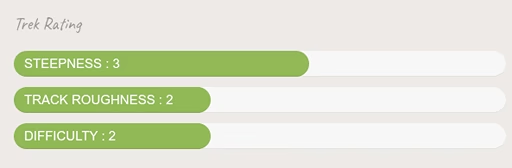
Our itineraries are designed for hikers. While they cover a variety of levels of difficulty, they are enjoyed most by people with a good level of fitness who hike regularly. The visit to Nabalesere and their waterfall is within most people’s ability. The track is 1.5km each way, with some up and down, but no time pressure. All the other walks are more strenuous. Longer days should leave you feeling satisfyingly tired after a good day’s hiking with a sense of achievement. The challenge of walking in Fiji comes from the heat, humidity, remoteness and the nature of the tracks, which are not constructed paths, are uneven, and can become muddy and slippery. If you don’t exercise regularly, we’d recommend getting out on the trail before you come to Fiji, as you’ll enjoy your trip with us all the more!
Footwear
Approach or trail shoes are ideal for Fiji conditions. But trainers/runners with a good grip or other walking shoes will do. Avoid stylish trainers with no grip! Paths can be slippery and muddy – especially after rain. We will also be crossing small creeks and some larger rivers, and you will get your feet and up to your knees wet! We recommend keeping your shoes on at all times, whether you’re crossing a river or even swimming.
Other clothing
Most people wear a lightweight t-shirt (quick-dry, collared t-shirts are ideal) and a pair of shorts for walking, but if you want to protect your shins from grass cuts, then trousers, long socks (stylish!) or exercise leggings are highly recommended. If you have a lightweight raincoat/pac-a-mac, it’s worth carrying it in case we get caught in a shower… it won’t keep you dry, but it’ll keep the wind out. We also strongly recommend you bring a hat to keep the sun off your head.
Although the piped water in the villages is drunk by the locals, to reduce the chance of any problems we strongly recommend you only use only filtered, treated, or boiled water. We carry a supply of filtered water in our vehicles and we have installed Lifestraw Community filter systems at each overnight for refilling bottles. Lemon-leaf and lemongrass tea, using boiled water, is in plentiful supply in the villages, and with a bit of sugar added makes for a good energy drink!
In Fiji, you need to carry and be drinking a lot of water. How much will depend on the length of the walk, the heat, humidity, your own personal fitness, and how much you naturally sweat. However, you should be prepared to carry at least 2 litres of water, in your day pack and ensure you have enough carrying capacity. In case of urgent need there are opportunities to replenish water bottles on some of the walks from side streams, using our filter or purifying tablets. We recommend a 2 to 3-litre capacity water reservoir/bladder, so you can sip away during hikes, or lightweight refillable bottles, plus an additional smaller bottle to mix electrolytes or for the car journeys. Taking on board electrolytes on a hot day can make a big difference.
Please note that drinking alcohol is not allowed in Fijian villages
Dinner and breakfast are provided by the villages. On this trip, you are responsible for your packed lunches and snacks to keep you fuelled during the hikes. Please let us know if you have any dietary requirements before your trip. There are no shops or stores once we leave the coast.
Check out our FAQs and if there’s anything you can’t find the answer to, please just drop us a line via the Enquiry Form or email [email protected].
Please note
The information provided here is to support independent travellers to visit more remote places in Fiji to go hiking. You are fully responsible for your actions and need to exercise judgement based on your experience and preparedness for any hike taking into account recent and forecast weather conditions and river levels. We bear no responsibility for any action you take based upon this information.